When it comes to feeding our families, understanding the basics of nutrition isn’t just helpful—it’s essential. In a world full of options, it’s important to focus on what truly nourishes us: real food.
Real food is defined as whole foods that are unprocessed or minimally processed, free of chemical additives, and rich in nutrients. Real foods provide the building blocks of life and include carbohydrates, proteins, healthy fats, vitamins, and minerals that the body needs to function properly.
What are Macronutrients?
Macronutrients are nutrients that provide the body with energy. They are needed in large amounts for growth, metabolism, and other bodily functions. There are three types of macronutrients:
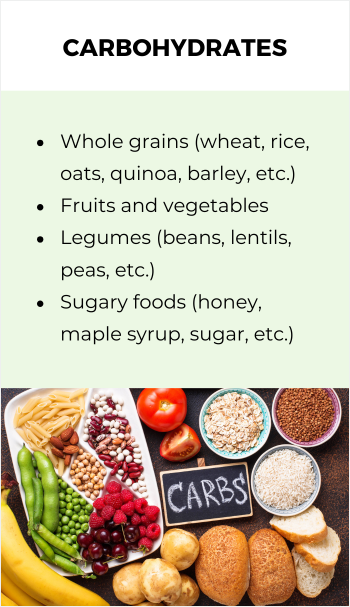
- Carbohydrates: the body’s primary source of energy. When digested, the body breaks down carbohydrates into simple sugars, such as glucose, which fuel every cell in the body.
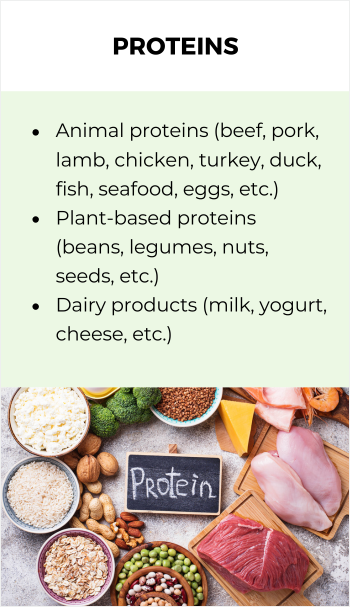
- Proteins: the building blocks of life. They are necessary for the the growth and repair of tissues, muscles, bones, and organs. They are made up of 20 amino acids, nine of which are essential for life and must be obtained from food.
- Fats: an important source of energy and essential fatty acids. Key functions include energy production, brain function, insulation, and protection of organs. They are also necessary for the absorption of vitamins and minerals.

What are Micronutrients?
Micronutrients are nutrients that are required in small (micro) amounts for the body to function properly. They play an essential role in various body processes, including cell growth, energy production, and immune function.
Vitamins
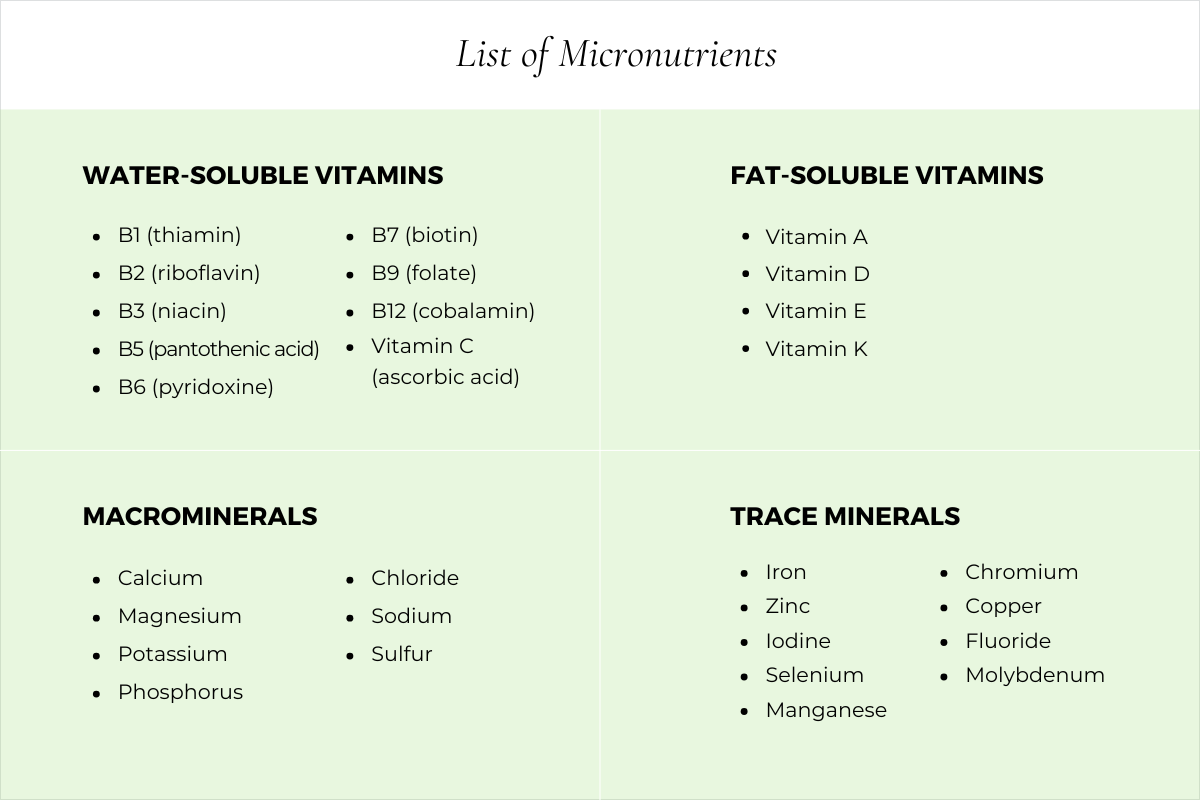
There are 13 essential vitamins that are categorized into two groups:
- Water-soluble vitamins: the B vitamins (thiamine, riboflavin, niacin, pantothenic acid, pyridoxine, biotin, folate, cobalamin) and vitamin C (ascorbic acid). When digested, these vitamins are absorbed directly into the bloodstream.
- Fat-soluble vitamins: vitamins A, D, E, and K. These vitamins are absorbed through the intestinal tract along with dietary fats and are stored in the body’s fatty tissues for later use.
Minerals
There are 16 essential minerals that are categorized into two groups:
- Macrominerals: calcium, magnesium, potassium, phosphorus, chloride, sodium, and sulfur. Macrominerals are needed in large amounts.
- Trace minerals: iron, zinc, iodine, selenium, manganese, chromium, copper, fluoride, and molybdenum. Trace minerals are needed in very small amounts.